Disaster Relief - North Mississippi
In February of 2026, when winter tightened its grip on the South with unusual fury, a small group from Living Hope Church loaded up and headed south. The news had been filled with images of ice-laden trees, splintered roofs, and darkened homes across North Mississippi. Towns like Oxford, Ripley, and Corinth had been battered by a winter storm that delivered a relentless mix of freezing rain, sleet, snow, and piercing arctic wind. Power lines lay twisted along rural roads. Limbs snapped like toothpicks under the weight of the ice. Hundreds of families found themselves displaced, cold, and overwhelmed.
For Johnny Hopper, David Baggett, Chester Ervin, Scott Lageman, Bobby Hawks, and Tee & Jheryl Meeks, the decision to go wasn’t complicated. The work would be difficult—especially for men and women who no longer considered themselves young—but the need was greater than comfort.
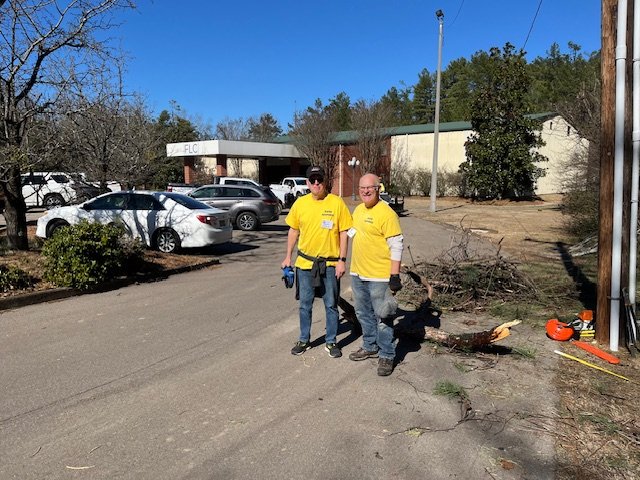
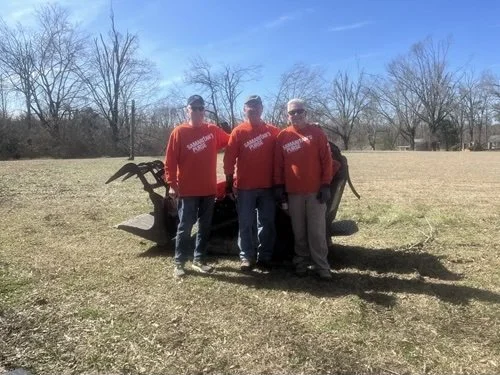
When they arrived, entire yards were buried beneath tangled limbs and broken trunks. The team partnered with relief organizations (Samaritan’s Purse, Eight Days of Hope, & God’s Pit Crew) already on the ground, joining efforts with volunteers and chaplains from across the nation who had mobilized quickly after the storm. Each morning began with prayer, asking for strength, safety, and open hearts.
Days were filled with intense labor. We tackled massive fallen oaks, carefully chainsaw cutting and clearing debris without damaging what remained of fences, sheds, and/or homes. The team hauled limbs and brush into manageable piles that were quickly transported by skid steer to the curb for removal. Most worked steadily alongside the others, gathering debris, offering encouragement, and stopping often to check on weary homeowners watching from porches or outside the work area.
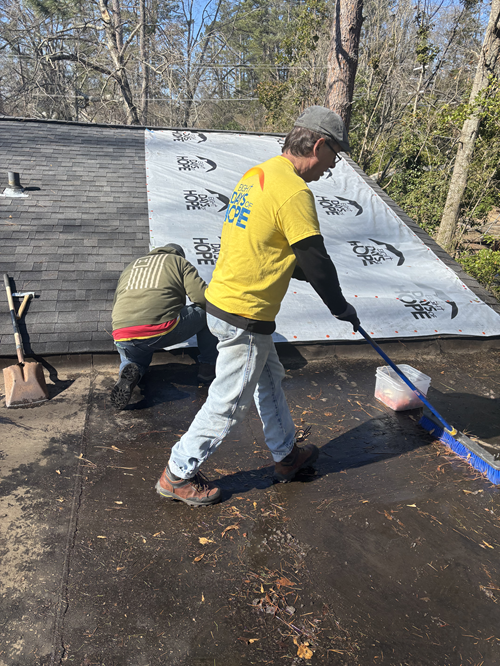
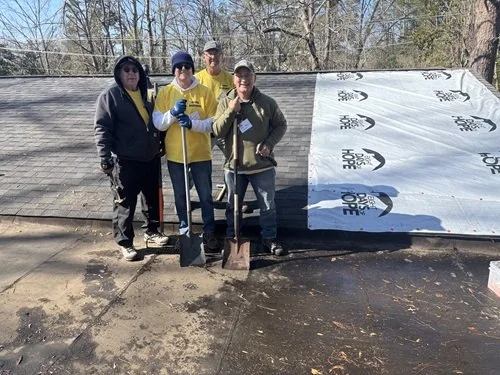
At one home in Oxford, an elderly widow stood quietly as we cleared broken pines and other trees that had fallen in her yard and damaged her roof. She admitted she hadn’t known who to call. When the last limb was removed and the roof cleared and tarped, the group gathered with her in the yard. The team lead spoke gently about hope that outlasts any storm. Heads bowed in the cool air as they prayed.
In Corinth, the team worked a long day clearing a property where multiple trees had fallen across the property of a 100-year-old modest home. As the day went on, exhaustion started to show its face. Back & shoulders ached. Still, when the last of the debris was moved and the yard restored to something recognizable, they gathered the homeowners together. What began as small talk turned into a gospel conversation that lingered long after the chainsaws went silent.
At the conclusion of each project, the team lead would retrieve a Bible with encouraging notes written in the front pages from each volunteer to the homeowner. It wasn’t presented as a token or a formality, but as a gift—something sturdier than oak timber, more enduring than repaired fences. They would explain that while ice storms pass and cleanup ends, the promises within those pages remain steady. Many homeowners accepted the gift with gratitude; some with curiosity; a few with visible emotion.
The team did more than clear debris. They listened to stories of fear-filled nights without power. They heard accounts of tree limbs crashing just feet from bedrooms. They prayed over families standing in yards once scattered with splintered trees and wood debris.
By the end of the week, their bodies were tired. These were not easy days for older volunteers. Every lift, every cut, every load of debris carried a cost. Yet each evening, as they reflected together, they spoke less about their fatigue and more about the people they had met.
The storm had left destruction across Mississippi, Tennessee, and Louisiana, but it had also opened doors—doors into conversations about faith, hope, and the unshakable foundation found in Christ.
We carried names and faces, memories of prayers whispered in cleaned-up yards, and the quiet assurance that even in the aftermath of ice and ruin, seeds had been planted.
The winter storm would be remembered for its damage. But for those families in North Mississippi—and for the team from Living Hope Church—it would also be remembered as the week strangers showed up, worked hard, loved deeply, and left behind more than just cleared land.